When Disaster Strikes: Your Guide to Fast & Reliable Emergency Tree Services in Chardon, OH
I. Introduction: Chardon’s Green Canopy Under Threat
Imagine a peaceful evening in Chardon, the kind where the snow is gently falling and the wind is still. Then BAM! A massive storm hits, the snow turns to ice, and a tree crashes onto your roof or blocks your driveway. Panic sets in. What do you do?
Emergency tree service isn’t about the gentle art of pruning roses or shaping hedges on a sunny afternoon. No, we’re talking urgent, on-demand intervention for hazardous trees or limbs posing immediate threats to your home, your family’s safety, or even the integrity of power lines. It’s a matter of swift, decisive action, not leisurely, scheduled maintenance.
Why Chardon, specifically? Nestled deep within Ohio’s notorious “snow belt” and prone to the whims of severe storms rolling off Lake Erie, Chardon residents are, perhaps, more familiar than most with the potential devastation that trees, however majestic, can inflict. Knowing who to call, what to expect, and how to navigate the complexities of tree removal in a crisis can be a game-changer, a shield against chaos.
This post isn’t about scaremongering; it’s about empowerment. We aim to cut through the confusion, dissect the jargon, and give you the unvarnished truth on what constitutes truly fast and reliable emergency tree services, tailored to the unique circumstances of life in Chardon.
II. Chardon’s Stormy History: A Legacy of Fallen Trees
Chardon isn’t merely “Ohio’s Snowiest City,” boasting an average of 107 inches of snow annually. It’s a town whose very identity has been sculpted by the relentless forces of nature. It’s a town that has weathered its fair share of tornadoes and severe thunderstorms.
Consider the echoes of past disasters. The infamous Great Snow of ’96, when over 70 inches of lake-effect snow buried Chardon, required the intervention of the National Guard to simply clear the roads. It doesn’t take much imagination to picture the sheer scale of tree damage wrought by such a monumental snowfall. And then there’s Geauga County’s unwelcome flirtation with “Tornado Alley.” Recent years, specifically 2023 and 2024, saw multiple EF-1 tornadoes tear through the region, downing hundreds upon hundreds of trees, crushing vehicles, and severing power to thousands of homes.
Beyond the cold, hard statistics of property damage lies the human element. These events underscore the crucial need for quick-thinking, dependable emergency services capable of swiftly restoring safety and access to beleaguered communities.
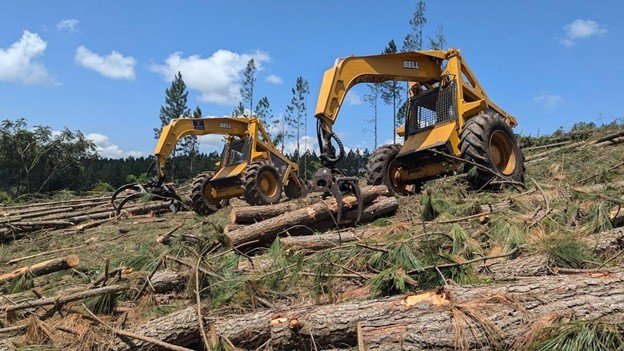
The “how” of tree removal has, of course, evolved. From the era of brute manual labor with axes and saws to the present day, with its sophisticated machinery, cranes, and bucket trucks, the core imperative remains constant: a rapid, skilled response in the face of nature’s unpredictable fury.
III. When a Tree Becomes a Terror: Typical Emergency Scenarios
It’s crucial to recognize that not every tree-related issue warrants a frantic emergency call. A single broken branch, while perhaps unsightly, doesn’t automatically qualify as a 911-level crisis. However, certain situations demand immediate and decisive action.
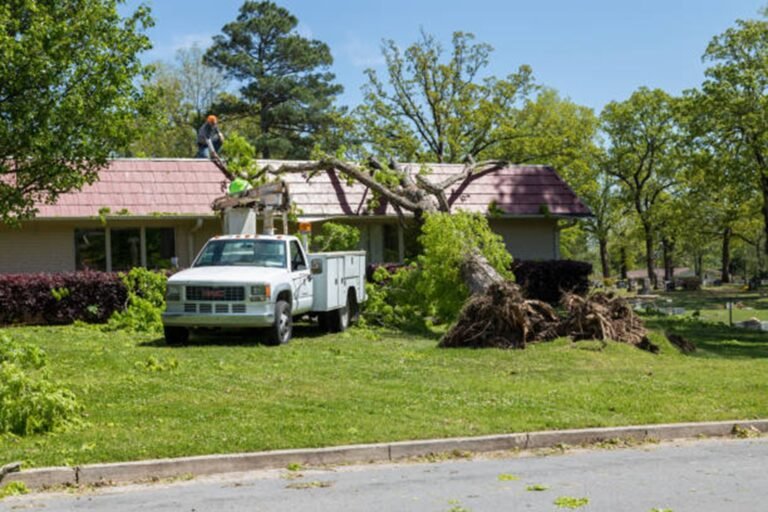
Consider these “Oh No!” moments: the aftermath of a violent storm, where high winds, heavy snow, accumulating ice, or a terrifying lightning strike can cause trees to fall, lean at alarming angles, or suffer catastrophic limb breakage. Or picture a tree that has fallen squarely on your house, your car, your fence, or is simply blocking your only driveway exit – hardly a situation that can wait until Monday morning. A tree threatening or, worse, entangled in power lines is a recipe for electrocution and fire; your first call should be to the utility company.
Then there’s the “Leaning Tower of Tree-za,” a sudden and inexplicable lean accompanied by exposed roots or ominous cracks in the trunk – unmistakable signs of imminent collapse. And let’s not forget the chillingly named “widowmakers”: those large, broken branches hanging precariously overhead, silently waiting for the opportune moment to fall unexpectedly. Finally, there’s the silent killer: advanced disease or decay that has insidiously weakened a tree’s internal structure, transforming it into a ticking time bomb.
IV. What Makes an Emergency Tree Service *Truly* Reliable? (The Customer’s Wishlist)
Engaging an emergency tree service is about more than just summoning someone with a chainsaw. It’s about securing a sense of peace of mind during what is invariably a stressful and potentially frightening time.
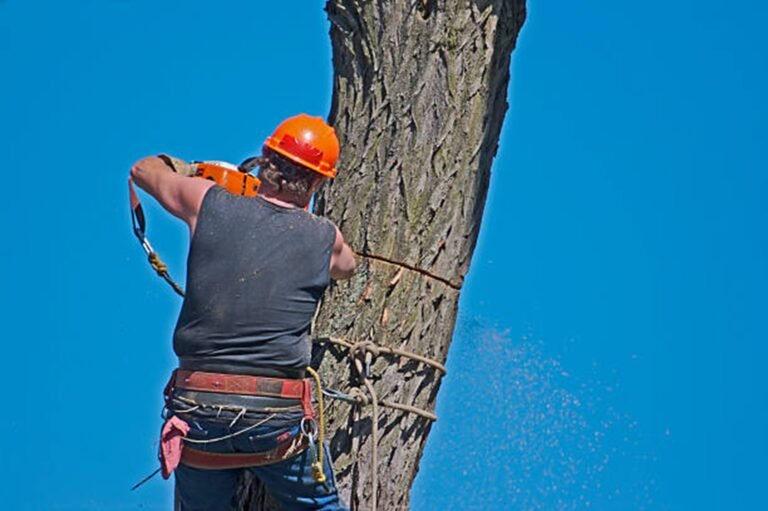
The non-negotiables begin with 24/7 availability and lightning-fast response times. Emergencies, as the saying goes, don’t punch a clock. You need a team ready to mobilize, often within a matter of hours, regardless of the time of day or night. Expertise is paramount. Certified arborists, seasoned crews, and a demonstrable track record of safely handling dangerous and complex tree situations are essential. This is emphatically not a DIY undertaking.
The right tools are also critical: cranes, bucket trucks, specialized rigging – professional-grade equipment is crucial for both efficiency and, above all, safety. Furthermore, the company must be fully licensed and insured; this protects you from potential liability should accidents occur. Always, without exception, verify these credentials. Crystal clear communication and transparent pricing are also key. There should be no hidden fees, no vague estimates. You, as the customer, have a right to know precisely what’s happening and what it will cost. Finally, a reputable company will “leave no trace” (or as close to it as possible), ensuring a thorough cleanup of all debris. Your yard should look better, not worse, once they’ve completed their work.
In Chardon, local companies such as Greentop Tree Services, Cleveland Tree & Stump, LLC, and All Trees Considered, LLC frequently receive high marks for exhibiting these very qualities, particularly their promptness, professionalism, and meticulous cleanup procedures.
V. Navigating the Treacherous Woods: Controversies and Red Flags
The unfortunate reality is that the urgency inherent in tree emergencies can, and often does, attract less-than-reputable operators seeking to exploit vulnerable homeowners.
Be especially wary of price gouging, the practice of charging exorbitant fees, particularly in the immediate aftermath of a major storm. Estimates that seem excessively high or, conversely, too good to be true should be viewed with extreme suspicion. Demands for cash-only upfront payments are a significant red flag. Reputable companies rarely, if ever, demand full cash payment before commencing work. A verbal agreement is never enough; always insist on a detailed, written contract outlining the specific services to be performed, the associated costs, and the anticipated timelines. Finally, be exceedingly cautious of unlicensed and uninsured “storm chasers.” Engaging such operators exposes you to enormous financial and legal risks should someone be injured or if further damage occurs.
It is also important to note that, in Ohio, there is no specific statewide “tree trimming license.” This places an even greater onus on consumers to conduct thorough due diligence to verify business licenses and insurance coverage.
The tragic incident involving Dash Tree Services, Inc. in January 2024, where a fatal accident occurred involving a stump grinder, serves as a stark reminder of the inherent dangers involved and the critical importance of adhering to strict safety protocols.
The Ohio Attorney General’s office regularly issues warnings against door-to-door tree trimming scams, urging consumers to obtain multiple estimates, meticulously check references, and fully understand their cancellation rights.
VI. Looking Ahead: The Future of Tree Care in a Changing Climate
Chardon, like many other regions across the globe, is experiencing an increase in the frequency and severity of extreme weather events. This, inevitably, translates into a greater demand for emergency tree services.
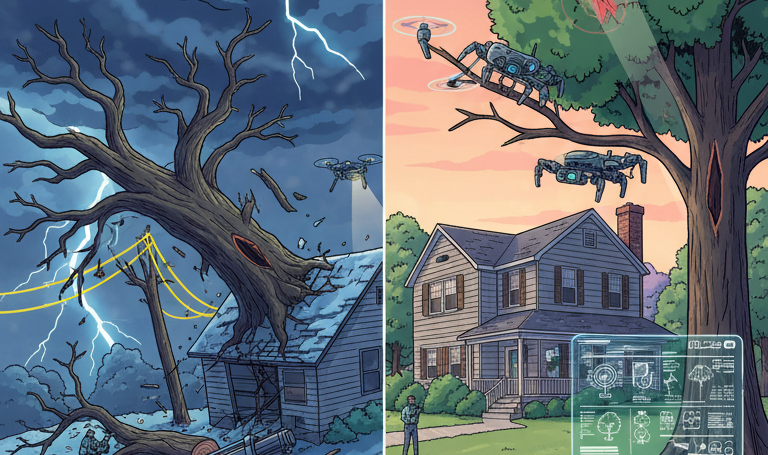
Technology offers a glimmer of hope. Imagine a not-too-distant future where drones equipped with advanced sensors inspect your trees for hidden diseases or structural weaknesses, with sophisticated AI algorithms predicting potential fall risks before a storm even hits. This would represent a paradigm shift from reactive intervention to proactive care. Remote-controlled equipment and precision lasers could make the inherently dangerous task of tree removal significantly safer for workers. Even the trees themselves could become “smart,” equipped with sensors that continuously monitor their health and signal potential problems early on.
Best practices in arboriculture are also evolving. Proactive care, encompassing regular inspections and preventative pruning, will become increasingly crucial in mitigating risks. A greater emphasis will be placed on eco-friendly methods and sustainable practices, giving rise to “green arboriculture.” And, of course, ongoing training, advanced personal protective equipment (PPE), and rigorous safety protocols will be paramount.
However, challenges remain. The industry continues to grapple with labor shortages, the high cost of specialized equipment, and the persistent problem of unqualified and unscrupulous operators.
VII. Conclusion: Be Prepared, Chardon!
Proactive tree maintenance remains your best defense against the need for emergency intervention.
Consider this your emergency checklist: Know the signs of a hazardous tree. Maintain a readily accessible list of contact information for reputable, licensed, and insured emergency tree service providers. Understand the key attributes of a reliable provider: 24/7 availability, proven expertise, proper equipment, and clear communication. And, above all, be acutely aware of common scams and red flags.
In Chardon’s unique and often unforgiving climate, being well-informed about emergency tree services is not merely a matter of convenience; it’s an essential component of ensuring the safety and peace of mind of your home, your family, and your community.